
Smartwatch vs Traditional Watch: Which to Buy
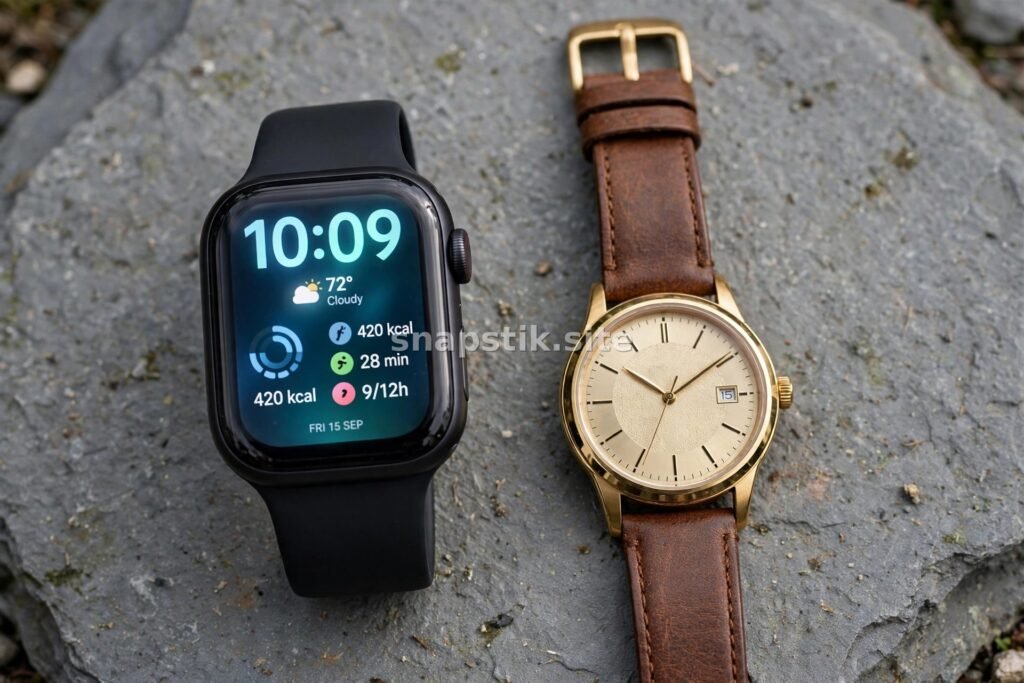
Should you buy a smartwatch or a traditional watch? It is one of the most common questions in watches today, and the honest answer is that both are excellent — for different reasons. The choice matters because the two kinds of watch are built for different purposes, and each has strengths the other cannot match. Here is how they compare, so you can decide which suits your life better.
What a Smartwatch Offers
A smartwatch is a small computer on your wrist. It tracks your steps, heart rate and sleep, shows messages and calls, plays music and can even make contactless payments. Many models also offer GPS, workout tracking and health alerts. For anyone who exercises regularly or likes staying connected without reaching for a phone, a smartwatch is genuinely useful. It is also the more practical choice if you want one device that does many jobs at once, from navigation on a run to a silent alarm in the morning.
What a Traditional Watch Offers
A traditional watch does one thing — tell the time — and does it with craftsmanship. Whether it is powered by an automatic movement or a quartz battery, a traditional watch is a piece of engineering and design that can last for decades. It never needs charging, never becomes outdated by a software update, and often becomes more meaningful with time. A traditional watch is also a style statement in a way a glowing screen rarely is. If you are weighing up the two movement types, our guide to automatic vs quartz watches explains the difference in plain language.
Smartwatch vs Traditional: Side by Side
- Features: smartwatch wins — fitness tracking, notifications, apps and payments.
- Battery life: traditional wins — years on a battery, or no battery at all for an automatic.
- Longevity: traditional wins — a good mechanical watch can last a lifetime and be passed on.
- Style: traditional wins for most people — a classic watch suits formal occasions in a way a screen rarely does.
- Price: both range widely, but a traditional watch holds its value better over time.
- Convenience: smartwatch wins for daily tasks, but needs charging every day or two.
Which Should You Buy?
Ask yourself what you want the watch to do. If your priority is fitness tracking, health data and staying connected, a smartwatch is the better tool — and our roundup of the best watches for sports and fitness includes strong options. If your priority is style, craftsmanship and something that will still be working in twenty years, a traditional watch is the better choice. If you are buying your first serious watch, read how to choose your first luxury watch before you decide.
Owning Both
Many people end up owning both — a smartwatch for workouts, workdays and travel, and a traditional watch for evenings, weekends and special occasions. There is no rule that says you must choose one forever. Start with the one that fits your daily life best, and add the other later if you want it.
What About Hybrid Watches?
Hybrid watches try to offer the best of both worlds: the look of a traditional analog watch with basic smart features hidden inside, such as step tracking and notifications through the hands or a small sub-dial. They need charging far less often than a full smartwatch and look at home in formal settings. The trade-off is fewer features — no bright screen, no apps, no maps. If you want a classic look with a touch of connectivity, a hybrid is worth a look.
Smartwatch or traditional is not a right-or-wrong decision. It is a question of what you value most: the convenience of technology, or the character of craftsmanship. Choose the one that fits your life, and you will wear it happily.

How to Spot a Fake Watch

How to Set the Time and Date on Your Watch

Vintage Watches: What to Look For When Buying
About The Author

Beauty Hub
Beauty Hub is a small independent website sharing practical, honest guides on nails, beauty, skincare, fashion, watches, cakes and home decor — plus plain-English guides to everyday money topics. Everything here is researched and written by our own team, with images created by us for each article.