
Watch Complications Explained Simply
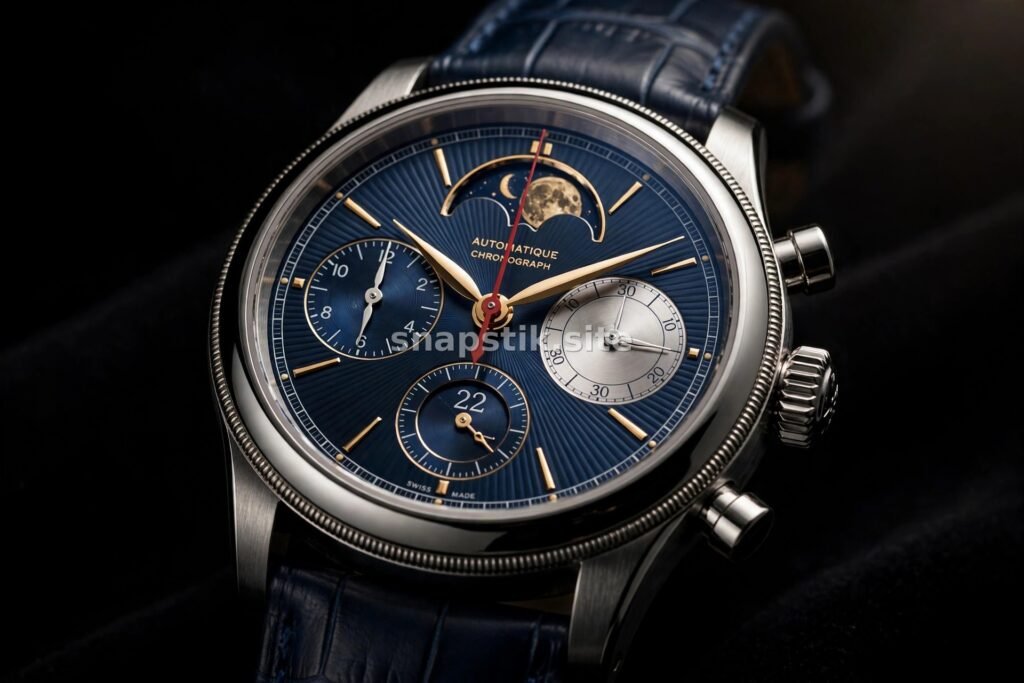
In watchmaking, a complication is any function beyond telling the hours, minutes and seconds. A date display is a complication. So is a chronograph, a moon phase, or an alarm. Complications are where watchmakers show off their skill — and where watches get really interesting. Here is a simple guide to the most common ones.
What Is a Complication?
The word complication sounds complex, but the idea is simple: it is anything extra the watch does. A basic watch tells the time. A watch with complications does more — it can show the date, time an event, track a second time zone, or display the phase of the moon. Each complication adds parts to the movement, which is why complicated watches are usually more expensive and more admired. Complications are most common in mechanical watches, where they demonstrate the watchmaker’s craft. To understand the movements that power them, read our guide to watch movements explained for beginners.
The Date and Day-Date
The most common complication is the date. A small window on the dial shows the day of the month, changing at midnight. A day-date display adds the day of the week as well. Date complications are practical and easy to use, though they need adjusting at the end of shorter months. Setting the date safely matters: never change it between 9 PM and 3 AM, when the mechanism is engaged — forcing it during those hours can damage the gears.
The Chronograph
A chronograph is a stopwatch built into the watch. It has sub-dials for elapsed seconds, minutes and hours, and pushers on the case to start, stop and reset the timing. Chronographs are one of the most popular complications, loved for their sporty look and practical use — timing a run, a lap, or a parking meter. Our full guide to chronograph watches explains how they work and why people love them.
The Moon Phase
A moon phase complication shows the current phase of the moon through a small window on the dial, usually with a rotating disc painted with a moon and stars. It is one of the most beautiful complications, and one of the oldest — moon phase displays have been part of watchmaking for centuries. A well-made moon phase is accurate to within a day over many years, and it adds a romantic, astronomical touch to a watch.
GMT and Dual Time
A GMT or dual-time watch shows two time zones at once, usually with an extra hand and a 24-hour scale on the bezel or dial. It was originally made for pilots and travellers, and it remains genuinely useful for anyone who travels or works across time zones. Set the main hands to your local time and the GMT hand to your home time zone, and you can read both at a glance.
Power Reserve and Other Complications
A power reserve indicator shows how much energy is left in the mainspring, so you know when your watch needs winding. Other complications include alarms, calendars that account for leap years, tourbillons that improve accuracy, and minute repeaters that chime the time. The most complex watches combine several complications at once — a feat of engineering that can take years to build. Skeleton watches often display these complications openly, letting you see the mechanism at work; our article on skeleton watches shows how.
Complications are what turn a watch from a tool into a piece of mechanical art. You do not need them — a simple watch tells the time perfectly well — but they add character, history and wonder to the watch on your wrist.

Automatic vs Quartz: What’s the Difference?

How to Style a Watch with Any Outfit

Vintage Watches: What to Look For When Buying
About The Author

Beauty Hub
Beauty Hub is a small independent website sharing practical, honest guides on nails, beauty, skincare, fashion, watches, cakes and home decor — plus plain-English guides to everyday money topics. Everything here is researched and written by our own team, with images created by us for each article.