
How to Style Open Shelves

Open shelves are beautiful and practical at the same time. They turn everyday dishes, books, and objects into part of the decor, and they make a kitchen or living room feel open and airy. But open shelves can also turn into clutter fast. The difference is in how you style them.
Good shelf styling is not about owning perfect things. It is about grouping, spacing, and leaving room to breathe. Here is how to make your shelves look considered instead of crowded.
Start Empty and Edit Hard
Take everything off the shelves and start fresh. Choose the pieces you actually use and love, then put the rest away. A shelf with five beautiful things looks better than a shelf with fifteen random ones. Editing is the hardest part, and it makes the biggest difference.
The Rule of Groups
Style in small groups of three or five. A stack of bowls, a small plant, and a jar look like a deliberate arrangement. A single lonely mug in the middle of a long shelf looks lost.
Vary the heights inside each group. A tall vase next to a short stack of books next to a medium jar creates a pleasing rhythm. When everything on a shelf is the same height, the eye gets bored.
Mix Useful and Beautiful
The best open shelves hold things you actually use. Everyday plates, glasses, and bowls belong on the lowest shelves where they are easy to reach. Decorative pieces, like a favorite vase or a framed print, go higher up where they are seen but not handled daily.
In the kitchen, this balance matters most. A tidy, working kitchen feels calm, and open shelves can help or hurt that calm. For a full approach to keeping the kitchen organized, read how to organize a clutter-free kitchen.
Leave Breathing Room
Empty space is part of the design. Leave about a third of each shelf empty so the eye can rest and each group stands out. Shelves packed edge to edge look like storage, not styling, no matter how pretty the pieces are.
If a shelf looks full, remove one thing. Then step back and look again. Most shelves improve when something is taken away.
Layer for Depth
Layering adds depth and makes shelves feel collected over time. Lean a small cutting board or a framed print against the wall at the back, then place shorter objects in front of it. The layers create shadows and interest that a single flat row never achieves.
Books are perfect for layering. Stack two or three horizontally to create a platform, then put a small plant or a candle on top. The stack adds height and gives the smaller object a stage.
Repeat Colors and Materials
Pick two or three colors and repeat them across the shelves. White dishes, warm wood, and green plants is a classic combination that works in almost any kitchen. Repeating the same materials, like wood, ceramic, and glass, makes different objects feel like they belong together.
Old and new pieces mix beautifully on open shelves. A vintage jug next to a modern bowl tells a story. If you enjoy hunting for character pieces, our guide to vintage decor finds that add character shows what to look for and where to use it.
Style the Top and the Bottom
Do not forget the top of the shelving unit and the surface below it. A trailing plant on top softens the whole unit, and a tidy counter or table below it keeps the display grounded. The shelves are part of the room, not separate from it.
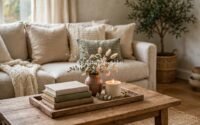
The same grouping and layering ideas work on a coffee table too. If you like styling shelves, you will enjoy our guide on how to style a coffee table.
Practical Tips That Keep Shelves Looking Good
- Keep everyday items on the lowest shelf for easy reach.
- Store rarely used pieces higher up or in a cupboard.
- Dust shelves weekly, since open storage shows dust fast.
- Swap one or two pieces with the seasons to keep the display fresh.
- Use baskets on the lowest shelf to hide small, messy items.
Open shelves reward a little attention. Edit hard, group in threes, leave space to breathe, and repeat your colors. The result is storage that looks like decor, and a room that feels open and personal at the same time.

About The Author

Beauty Hub
Beauty Hub is a small independent website sharing practical, honest guides on nails, beauty, skincare, fashion, watches, cakes and home decor — plus plain-English guides to everyday money topics. Everything here is researched and written by our own team, with images created by us for each article.