
Nail Health: Signs Your Nails Need a Break
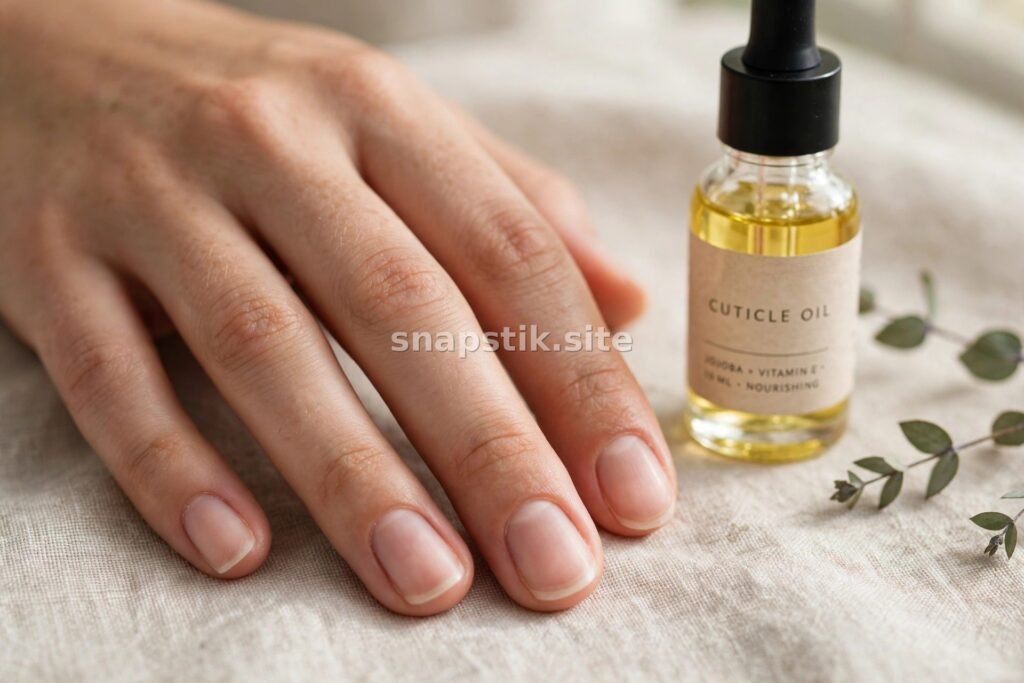
Your nails are always talking to you. Changes in colour, texture, and strength are often the first sign that your nails need a break — from polish, from extensions, or from harsh products. Ignoring the signs usually makes things worse: thin nails get thinner, peeling gets worse, and recovery takes longer. Here is how to recognise when your nails need a rest, and what to do about it.
Sign 1: Peeling and Splitting
If your nails peel in thin layers or split at the tips, the nail plate is damaged or dehydrated. Peeling is one of the most common signs of overuse — too much acetone, too many gel removals, or constant polish without a break. Give your nails at least a week bare, moisturise daily with cuticle oil, and avoid water exposure where you can. Our guide on how to strengthen weak, brittle nails covers the recovery routine in detail.
Sign 2: Thinning and Flexibility
Healthy nails are firm but slightly flexible. If your nails bend easily, feel paper-thin, or tear at the slightest touch, they have lost thickness — usually from peeling off gel or acrylic, or from over-filing. Thin nails need time and protection: keep them short, use a strengthening base coat, and do not apply any enhancements until they feel firm again.
Sign 3: White Spots or Discolouration
Small white spots are usually harmless — often caused by a minor bump to the nail. But widespread yellowing, greenish tints, or dark spots are different. Yellowing often comes from dark polish worn without a base coat, and it fades with a break from polish. A greenish tint can indicate a bacterial infection under a lifted enhancement, and that needs professional attention. If you notice a colour change that does not fade after a week of bare nails, see a doctor or dermatologist.
Sign 4: Ridges and Rough Texture
Vertical ridges are common and usually harmless — they often increase with age. But deep ridges, horizontal lines, or a rough, sandpaper-like texture can signal damage or a health issue. Horizontal lines (called Beau’s lines) can appear after illness or stress. If new ridges appear suddenly or the texture changes dramatically, it is worth mentioning to your doctor.
Sign 5: Pain, Redness, or Swelling Around the Nail
Pain, redness, or swelling around the nail — especially after a manicure or enhancement — can mean an infection or an allergic reaction. Do not cover it with polish and hope it goes away. Remove any product, keep the area clean, and seek medical advice if it does not improve in a day or two.
Sign 6: Nails That Won’t Grow
If your nails have stopped growing, or they break before they reach any length, they may be too damaged to grow normally. This is common after repeated acrylic or gel use without breaks. A rest period of two to four weeks, with daily oil and a strengthening treatment, usually restarts healthy growth.
Sign 7: Constant Lifting and Chipping
If your polish or gel lifts within a day or two, every time, the problem may be the nail surface, not the product. Damaged, oily, or peeling nails cannot hold polish properly. A break and a good care routine will fix the surface so polish sticks again. Our DIY nail care routine at home is a good place to start rebuilding.
How Long Should a Nail Break Be?
For most people, one to two weeks of bare nails is enough. For serious damage — very thin or peeling nails — four weeks is better. During the break, keep nails short, apply cuticle oil twice a day, and use a strengthening base coat as a protective layer. You do not have to go completely bare: a clear strengthening polish still lets the nail breathe while protecting it.
Preventing Damage in the First Place
- Remove gel properly: always soak it off, never peel. Our guide to how to remove gel polish safely shows the method that protects your nails.
- Take breaks between sets: a week off between gel or acrylic sets makes a real difference.
- Use a base coat: it protects the nail from staining and from polish remover.
- Moisturise daily: oil and hand cream keep the nail flexible and strong.
- Wear gloves: water and cleaning chemicals are the fastest way to damage nails.
Your nails are resilient. They grow, they recover, and with a little rest and care they come back stronger. Listen to what they are telling you — a short break now saves a long recovery later.

Press-On Nails: Everything You Need to Know

How to Apply Nail Stickers Like a Pro

French Manicure Ideas for Every Occasion
About The Author

Beauty Hub
Beauty Hub is a small independent website sharing practical, honest guides on nails, beauty, skincare, fashion, watches, cakes and home decor — plus plain-English guides to everyday money topics. Everything here is researched and written by our own team, with images created by us for each article.