
The Best Pilot Watches of All Time
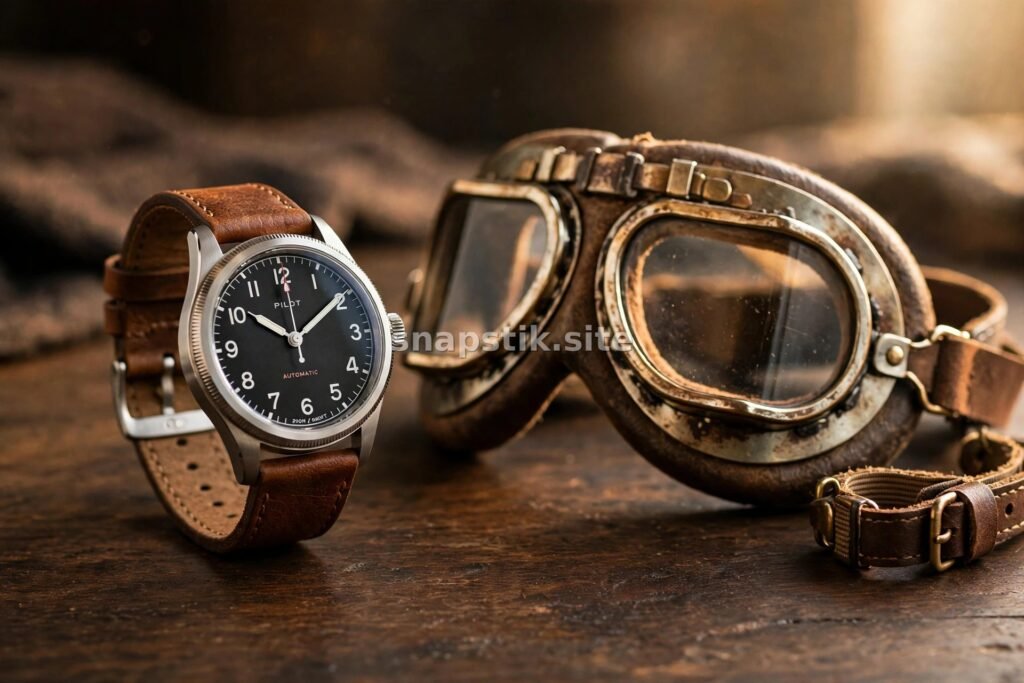
Pilot watches are among the most romantic and practical watches ever made. Born in the cockpits of early aircraft, they were designed to be read at a glance in difficult conditions — large numerals, luminous hands, and a crown big enough to operate with gloves on. Some of the greatest watches in history are pilot watches. Here are the designs that defined the category.
What Makes a Pilot Watch?
A classic pilot watch has a few defining features: a large, highly legible dial with bold Arabic numerals, a large crown, strong lume, and often a triangle marker at 12 o’clock. Many also have a chronograph for timing flights, and some include a slide rule bezel for navigation calculations. The emphasis is always on readability — a pilot needs to read the time instantly, without looking twice. That focus on clarity is why pilot watches are so loved even by people who never fly.
The Early Military Pilot Watches
The first pilot watches appeared during the First World War, when pilots needed wristwatches they could read in the cockpit. By the Second World War, several countries had issued standard pilot watches to their air forces. The German B-Uhr, or observation watch, was one of the most famous: a large 55 mm watch with a distinctive dial layout, a long strap designed to fit over a flight jacket, and a highly accurate movement. British and American pilots wore their own standard-issue watches, including the A-11, a simple, rugged watch that became a template for the field watch. These military watches were tools first and foremost, built to a specification rather than a fashion.
The Chronograph Era
After the war, pilot watches evolved into chronographs — watches with stopwatch functions for timing flights and navigation legs. The most famous pilot chronograph of all is the one worn on the Moon: the Omega Speedmaster, chosen by NASA for space missions and worn during the first Moon landing in 1969. Its story made it one of the most celebrated watches in history. Other great pilot chronographs followed, from brands known for aviation heritage, combining legible dials with reliable chronograph movements. If you want to understand how these timing watches work, read our guide to chronograph watches.
The Modern Pilot Watch
Today’s pilot watches keep the classic look — large numerals, clean dials, leather straps — but add modern materials and movements. Sapphire crystals, ceramic cases and highly accurate automatic movements have made them more durable and reliable than ever. Some modern pilot watches include complications such as a GMT function for tracking a second time zone, which is genuinely useful for travellers. For a plain explanation of these extra features, see our guide to watch complications explained simply.
Pilot Watches vs Dive Watches
Pilot watches and dive watches are the two great tool-watch families, and they make an interesting comparison. A dive watch is built for water, with a rotating bezel and high water resistance; a pilot watch is built for the air, with maximum legibility and a large crown. Both are rugged, practical and full of history. To learn how the dive watch earned its reputation, read the history of the dive watch.
Choosing a Pilot Watch Today
When choosing a pilot watch, start with size: classic pilot watches are large, often 40–44 mm, so try one on and make sure it suits your wrist. Look for strong lume, a clear dial and a comfortable strap — leather is traditional, but canvas and steel work well too. A pilot watch is a statement of adventure and precision, and it suits anyone who values legibility, heritage and honest design.
From wartime cockpits to the surface of the Moon, pilot watches have been part of some of the greatest stories in history. That is a heritage few other watch styles can match.


About The Author

Beauty Hub
Beauty Hub is a small independent website sharing practical, honest guides on nails, beauty, skincare, fashion, watches, cakes and home decor — plus plain-English guides to everyday money topics. Everything here is researched and written by our own team, with images created by us for each article.